
Daikin Air Source Heat Pump Installation in Hawkinge, Kent
A complete low-temperature heating and hot-water system designed and installed for a new self-build home near Folkestone. The project received a £7,500 Boiler Upgrade Scheme grant and later achieved a recorded seasonal coefficient of performance of approximately 5.0.
Designing the heating correctly from the start
This Hawkinge project gave us the opportunity to design a renewable heating system as part of the construction of a new self-build property, rather than trying to adapt a heat pump to an unsuitable existing system.
The homeowner required reliable space heating, efficient domestic hot water and a properly designed plant area. The system also needed to be installed in accordance with the applicable MCS requirements so that the project could access the Boiler Upgrade Scheme.
A heat pump is not simply a direct replacement for a boiler. Its performance depends on the relationship between the property's heat loss, emitter output, water flow rates, system volume, controls, hot-water requirements and operating temperature. Treating those elements as one complete design is what allows a heat pump to operate efficiently.
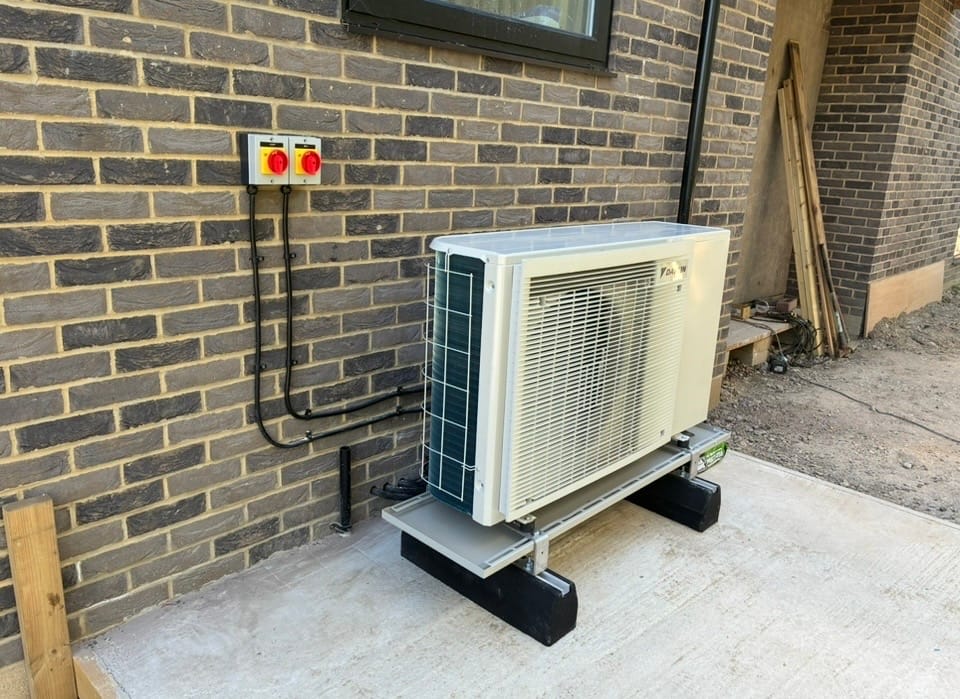
The completed Hawkinge heat pump installation
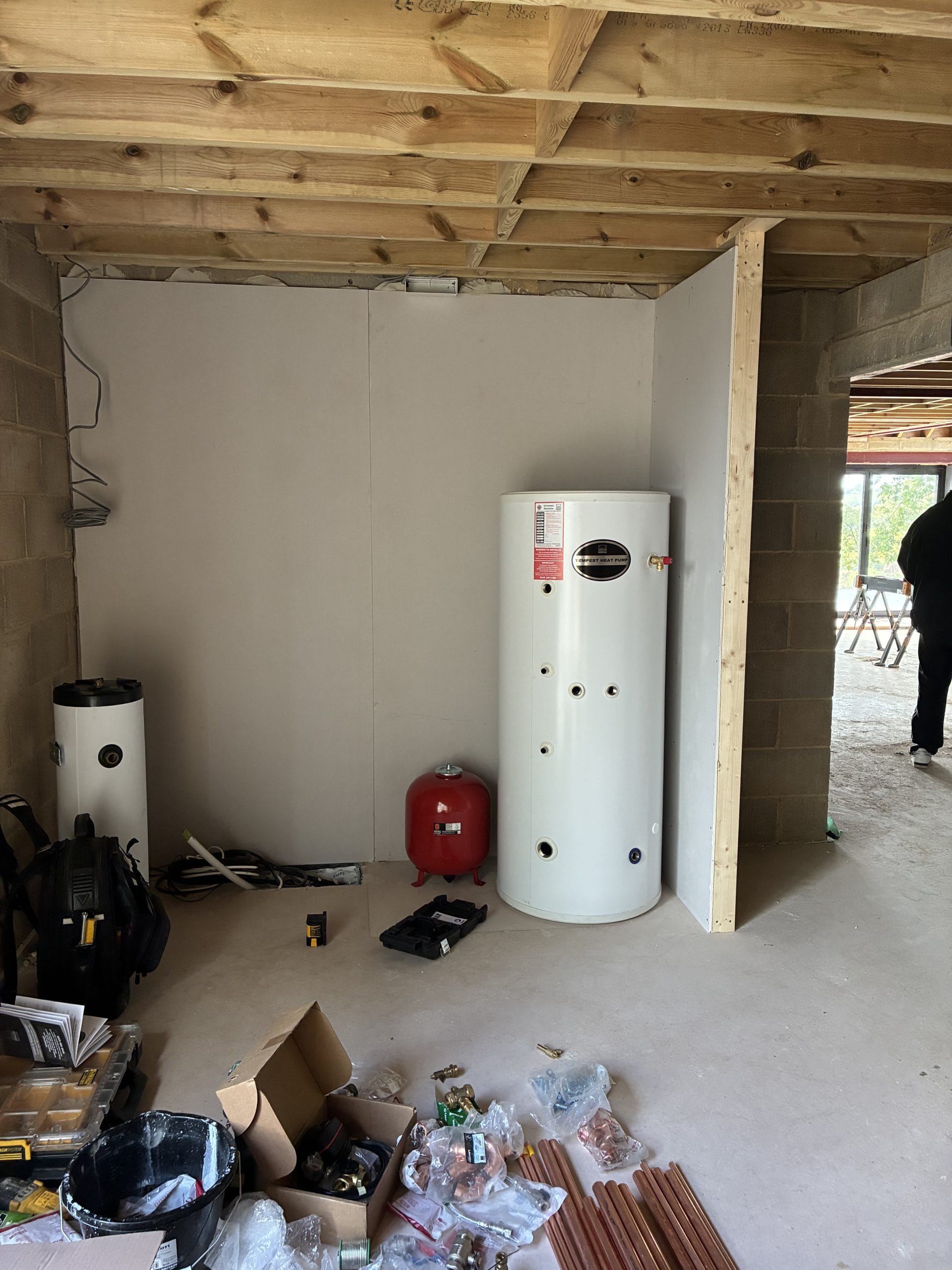
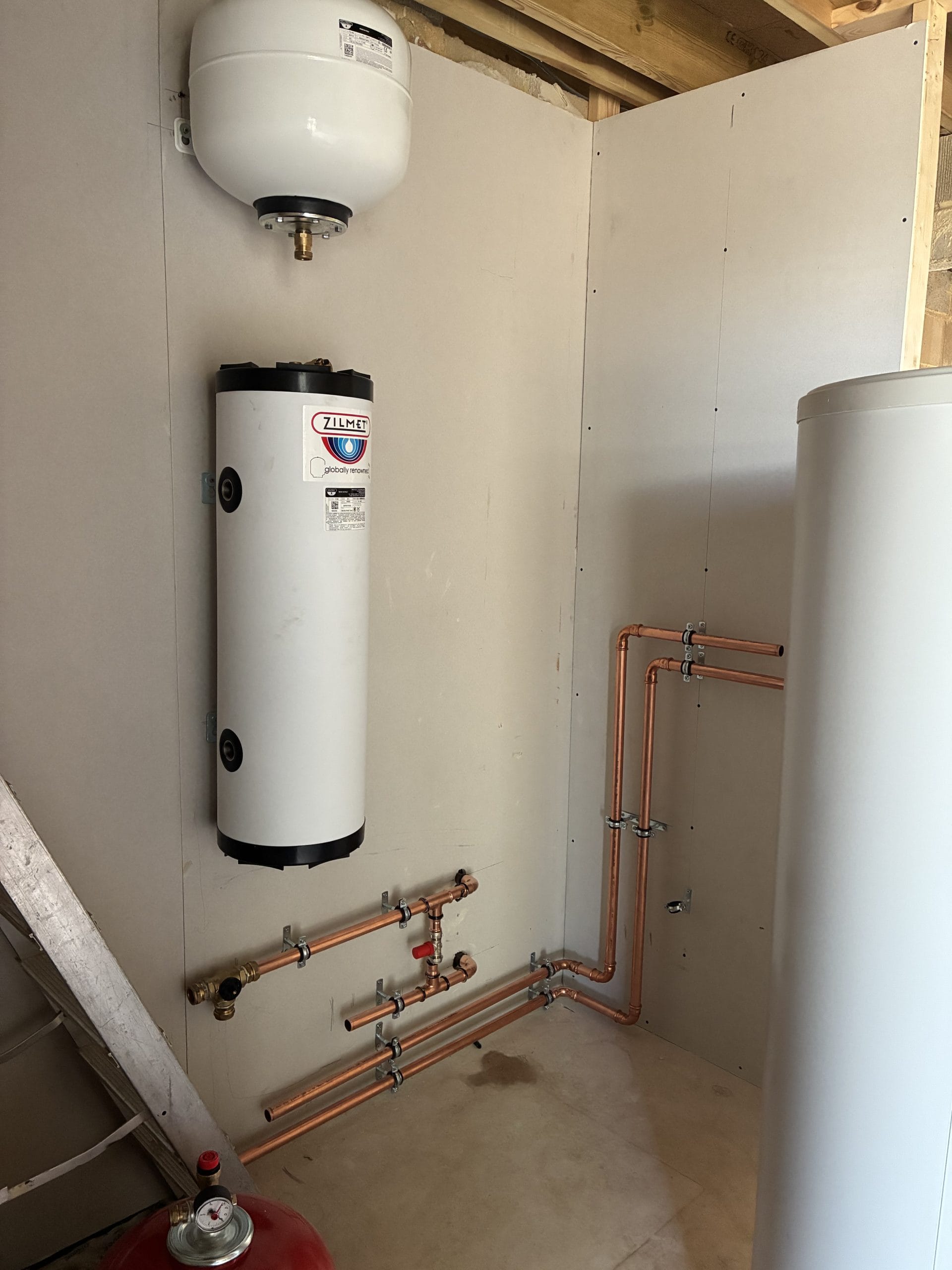
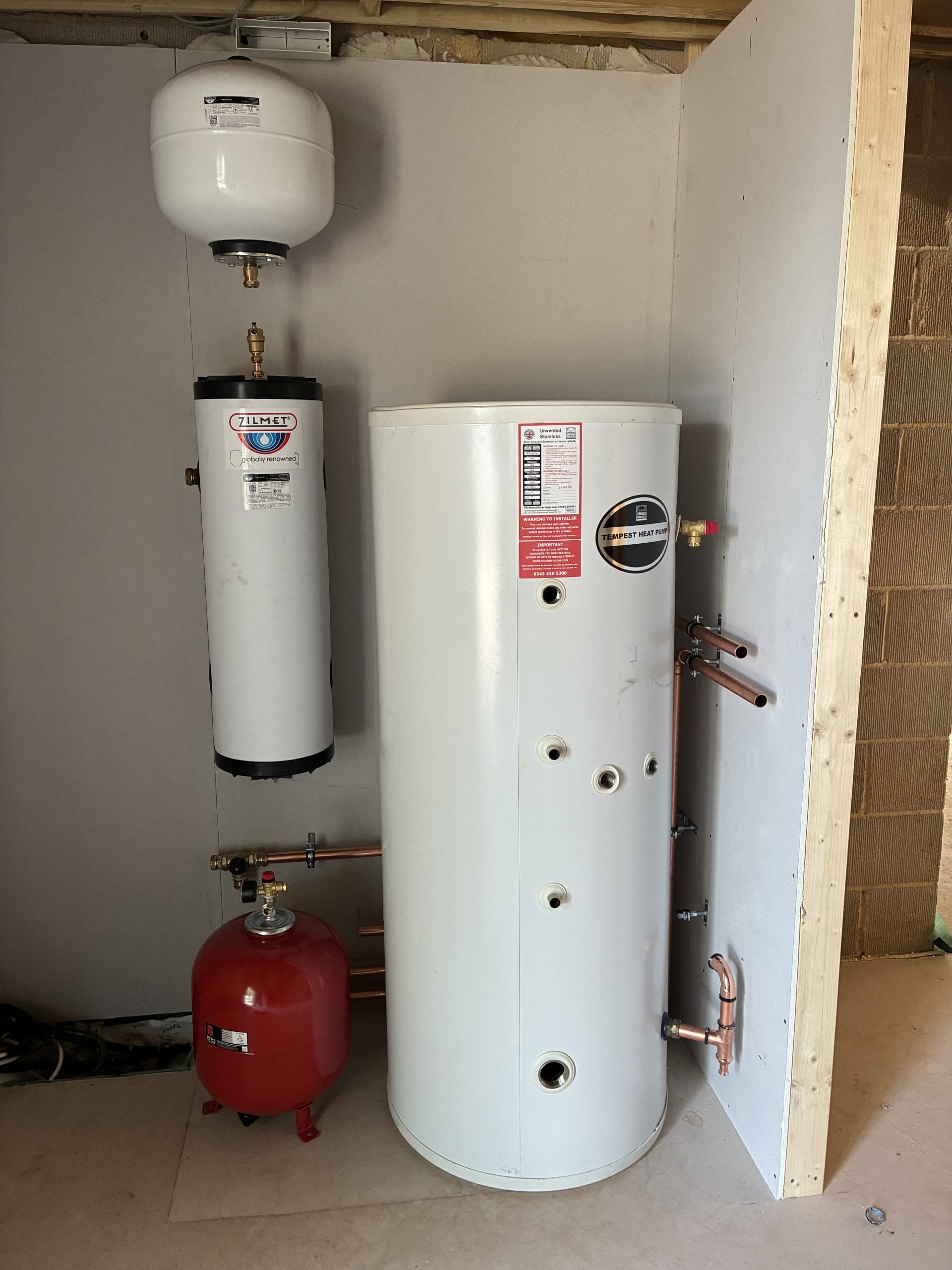
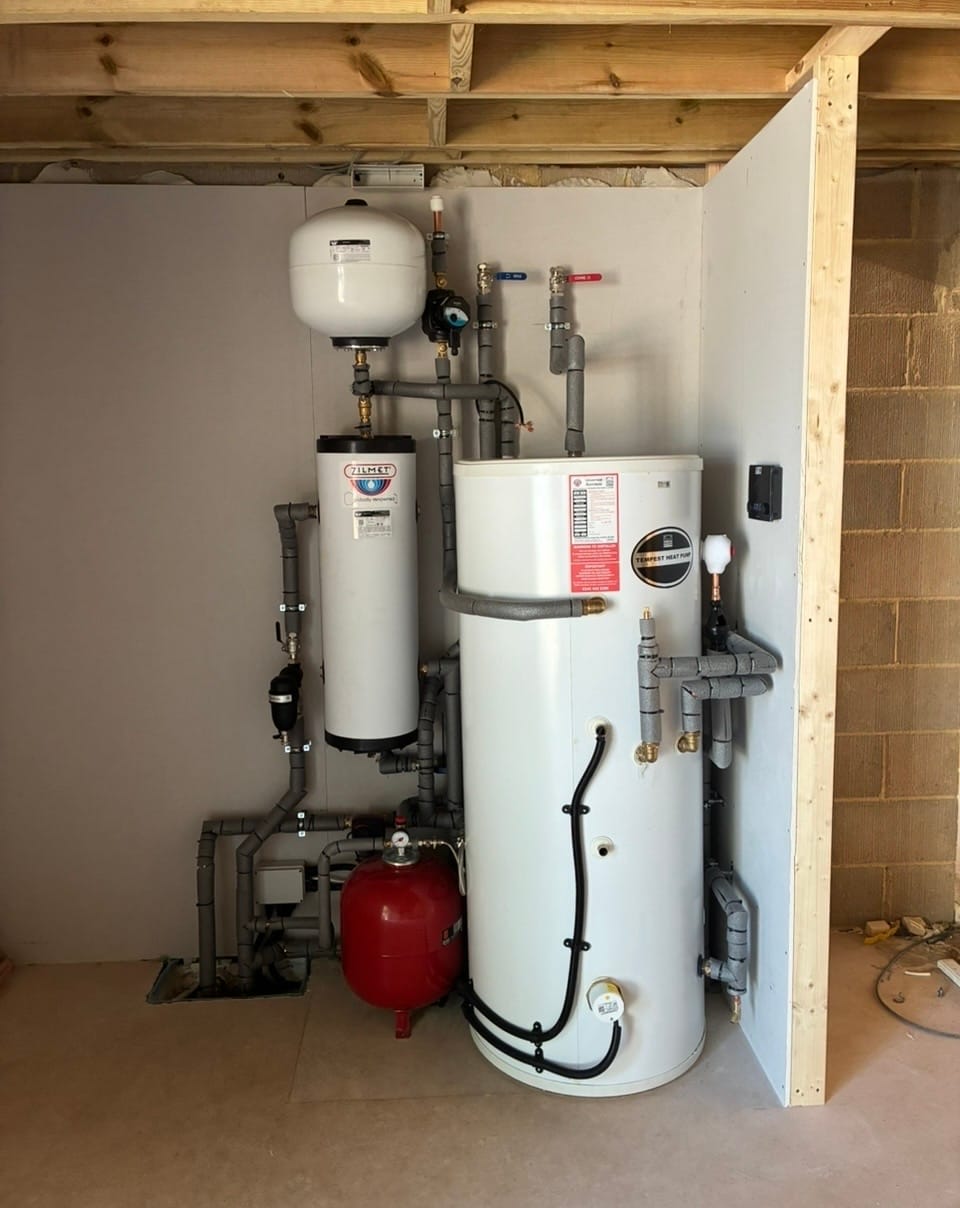
These photographs show the actual outdoor heat-pump unit, hydraulic components, hot-water storage and plant-room pipework installed for this self-build property.
Why design matters more than simply choosing a heat pump
The model badge on the outdoor unit is only one part of the installation. The quality of the design determines whether the system can heat the property comfortably without relying on unnecessarily high water temperatures.
Property heat-loss assessment
The building's expected heat demand is assessed so the heat pump and heat emitters can be selected against the actual property requirements rather than guesswork or floor area alone.
Low-temperature emitters
Heat pumps generally operate most efficiently when the required indoor temperature can be maintained using a lower heating-water flow temperature.
Hydraulic design
Pipe sizes, circulation rates, available pump head, system volume, pressure control and component resistance all affect performance and reliability.
Domestic hot-water design
Cylinder selection must consider household demand, coil performance, stored-water volume, heat-pump output and expected recovery requirements.
Controls and weather compensation
Correct control setup allows the system to adjust its heating-water temperature as outdoor conditions change instead of repeatedly operating at one excessive setpoint.
Commissioning and optimisation
Final checks, flow verification, control settings and customer guidance are essential. The system can then be reviewed and refined using real operating data.
A seasonal coefficient of performance of 5.0 means that, across the relevant measured period, the system indicated approximately five units of heat output for every unit of electrical energy attributed to heat-pump operation.
This is the recorded result for this particular property and system. It must not be treated as a guaranteed result for every home because performance changes with weather, indoor temperatures, hot-water use, controls, flow temperature, building fabric, occupancy and measurement method.
Efficiency came from the complete installation
The recorded result did not come from the outdoor unit alone. It reflects the interaction between the new building, low-temperature system design, suitable components, commissioning and the way the system has been operated.
- The heating system was considered during the self-build process.
- The system was designed around heat-pump operating temperatures.
- Hydraulic components were selected as part of one complete system.
- Primary pipework was insulated to reduce avoidable heat loss.
- Controls could be reviewed using actual operating performance.
- The annual service provided an opportunity to inspect and optimise the installation.
This Hawkinge self-build received a £7,500 heat-pump grant
As an MCS-certified heat-pump installer, C.L.E Renewable Energy handled the eligible installation and supported the Boiler Upgrade Scheme process for this project.
The scheme contribution reduced the amount payable by the property owner for the qualifying heat-pump installation. Eligibility is property- and project-specific, and the installer normally applies for the voucher on the owner's behalf.
Grant rules and values can change. A previous project receiving funding does not automatically mean another property will qualify, so eligibility should be confirmed before a customer commits to an installation.
Hawkinge heat pump case-study details
| Property | New self-build residential property |
|---|---|
| Location | Hawkinge, Kent, near Folkestone |
| Main technology | Daikin air-to-water air source heat pump |
| Heating approach | Low-temperature wet central-heating system designed for heat-pump operation |
| Hot water | Dedicated stored domestic hot-water system |
| Grant | £7,500 Boiler Upgrade Scheme contribution obtained for this installation |
| Installer status | MCS-certified heat-pump installation by C.L.E Renewable Energy |
| Performance | Approximately 5.0 SCOP recorded when reviewed after the annual service |
| Ongoing support | System servicing, inspection and performance review |
What to consider before installing a heat pump in Kent
The strongest heat-pump proposals explain how the complete heating system will work. A quotation based only on an outdoor-unit size and headline price leaves too many important questions unanswered.
Has the property's heat loss been calculated?
A room-by-room assessment helps determine the output required during colder outdoor conditions and identifies the heating demand in different areas of the home.
What flow temperature is being designed around?
The design temperature affects heat-pump efficiency and emitter output. The proposed radiators or underfloor heating must be capable of meeting the room loads at the selected temperature.
Can the existing pipework carry the required flow?
Heat pumps can require different water-flow characteristics from traditional boiler systems. Pipe sizing and resistance should therefore be considered during the design.
How will domestic hot water be produced?
The proposed cylinder volume, coil, recovery strategy and available space should all reflect the household's likely hot-water demand.
Where will the outdoor unit be positioned?
Air movement, drainage, service access, manufacturer clearances, noise, neighbouring properties and the visual impact should be reviewed before installation.
What happens after commissioning?
The owner should understand the controls and how a heat pump differs from a boiler. Servicing and performance review can identify faults, poor settings or opportunities for improvement.
Questions about heat pumps, self-builds and grants
Can a new self-build property qualify for the Boiler Upgrade Scheme?
Some self-build heat-pump projects can qualify, provided the property and installation meet the scheme's current requirements. Eligibility should be checked against the current Ofgem and government guidance before work is agreed.
Does every heat-pump customer receive a £7,500 grant?
No. This particular installation received a £7,500 contribution. The amount available and the qualifying rules depend on the current scheme, the proposed technology and the property circumstances. Funding should never be assumed until eligibility has been checked.
Why is an MCS-certified installer required?
MCS certification provides a recognised framework covering eligible renewable technologies, installer competence, design, installation and consumer protection. A qualifying MCS-certified installer is required for installations using the Boiler Upgrade Scheme.
What does a SCOP of 5.0 mean?
In simple terms, it indicates approximately five units of heat output for each unit of electrical input across the measured seasonal period. It is not the same as an instant COP reading, and results vary between properties and operating conditions.
Will every Daikin heat pump achieve a SCOP of 5.0?
No. The result shown here relates to this particular property and installation. Outdoor temperature, required flow temperature, household hot-water demand, system design, controls, maintenance and occupant behaviour can all affect measured performance.
Are air source heat pumps suitable for homes near Folkestone?
They can be suitable for many existing homes and new builds around Folkestone and across Kent, but suitability should be based on the building's heat loss, available outdoor space, electrical supply, emitters, pipework and hot-water requirements.
Do heat pumps work with radiators?
Yes, provided the radiators can deliver the required room output at the intended heating-water temperature. Some properties can retain suitable radiators, while others require selected radiator upgrades or another emitter solution.
Do heat pumps work with underfloor heating?
Wet underfloor heating can work particularly well with heat pumps because it can provide useful output using comparatively low water temperatures. The pipe layout, spacing, floor construction, flow rates and controls still need to be designed correctly.
How noisy is an outdoor heat-pump unit?
Sound varies by model, operating condition and installation position. Proper product selection, clearances, mounting, airflow and location are important. The potential effect on bedrooms, neighbouring windows and boundaries should be assessed during the design.
Does an air source heat pump need annual servicing?
Regular servicing is strongly recommended. It provides an opportunity to inspect the system, review operating data, clean or check relevant components, verify pressures and controls, and identify issues before they develop into larger faults.
How long does a heat-pump installation take?
Timescales vary significantly. A straightforward replacement differs from a complete new-build installation involving a plant room, hot-water cylinder, distribution pipework, emitters and coordination with other trades. A survey and design are required before a reliable programme can be given.
Can C.L.E Renewable Energy install heat pumps outside Hawkinge?
Yes. C.L.E Renewable Energy installs and services heat pumps across Kent, including Folkestone, Hythe, Ashford, Canterbury, Dover, Deal, New Romney, Romney Marsh, Maidstone and surrounding areas. Projects in South London and Surrey may also be considered.
Heating and cooling services across Kent
Considering a heat pump in Hawkinge, Folkestone or elsewhere in Kent?
Get an initial online estimate or speak directly with C.L.E Renewable Energy about your property, heating requirements and the current Boiler Upgrade Scheme.
C.L.E Renewable Energy is a trading name of C.L.E Building & Mechanical Services. Grant eligibility, system performance and running costs vary between properties. Any proposal is subject to survey, design, product suitability and the scheme rules applying at the time.